显示标签为“lutein benefits”的博文。显示所有博文

2017/1/9

Mediterranean Diet: Watermelon Can Lower Your High Blood Pressure

According to the Journal of the American Medical Association, reducing recent research sodium intake has a limited effect in lowering high blood pressure and a minimal effect on people with normal blood pressure. However, in the United States is finding out that a moderate sodium intake combined with a higher intake of potassium, calcium and magnesium, minerals that are found in fruit, vegetables and low-fat dairy products, offers more significant benefits for reducing high blood pressure than just restricting sodium intake. These four minerals, sodium, potassium, calcium and magnesium work together to regulate blood pressure.
And now, researchers from USDA Agricultural Research Service, Texas A&M University, University of Nevada, and Oklahoma State University, have reported that the levels of arginine in the blood increased by 22 per cent after three weeks of drinking watermelon juice with every meal. Arginine is a substance needed to produce nitric oxide, which has been shown to lower blood pressure, reduce blood clotting and protect against myocardial infarction and strokes.
The study included 23 volunteers who received 1560 grams of watermelon juice per day. Julie Collins, the lead author of the study, reports that the volunteers showed that fasting blood levels of arginine had increased by 22 per cent in three weeks. "Because the watermelon juice intervention was not continued longer than three weeks, it is not known if arginine levels will have remained stable at three weeks or if there would have been further increases with prolonged administration," stated the researchers.
Additional benefits of watermelons
The name of this fruit, watermelon, gives us a clear idea of what it is made of. Watermelon is, of all fruits, the one that contains the largest percentage of water, 93%. In fact, two large slices of watermelon are equivalent to one glass of water. Its refreshing and moisturizing qualities, along with its low contribution of energy –barely 20 calories in 100 grams- make watermelon, without a doubt, the queen of fruits during summer time.
Choosing a watermelon at the market
Watermelons that are grown in the open mature between the end of spring and the beginning of summer, reaching their peak during summer time. To know if a watermelon is just ripe, "knock" on the peel; if it sounds hollow it means the fruit is full of water, ripe, and ready for the whole family to enjoy its sweet flavor. Buy pieces that their peal is not damaged with bruises or dents.
If you buy a whole watermelon you can keep it outside the refrigerator for about two weeks since its thick peal protects the inside fruit. But once you start it, keep it in the refrigerator, well rapped so that it does not lose its water content.
  Watermelons are excellent diuretics: they stimulate kidney activity and increase the production of urine which favors the elimination of toxins. It is low in fiber and its fat content is almost non existent.
Noteworthy is its content of the carotenoids lutein and lycopene. Lycopene, the responsible pigment for the red color in certain fruits, has antioxidant properties that help reduce the risk of  cardiovascular disease.

2016/12/16

The Ingredients --- Food Coloring

The Ingredients --Food Coloring

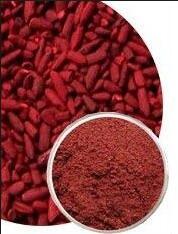
Food coloring is a substance that is added to foods to make them look more vibrant and appetizing. Food coloring is a type of food additive, which are used to enhance the color and appearance of foods that can be found in a large number of food products right from a candy to baked goods, frosting and even wine. Apart from creating a new color and enhancing the natural color of a food, food coloring can help to protect the color of a food or drink from the effects of light, temperature and storing conditions. In general, food coloring comes in two forms, dye and lake. Dye is soluble in water, but insoluble in oil, while lake is soluble in oil and more stable than dye. But, what does food coloring contain? Food coloring can contain several ingredients, which can vary slightly among the different types of food colorings.
Components of Food Coloring Agents
Food coloring can be natural and artificial, and the artificial food coloring can contain several color additives. The artificial food coloring can contain propylparaben, propylene glycol and certified color additives by the FDA (Food and Drug Administration) of United States, which are usually denoted by certain numbers. As for example, the artificial red dye can contain FD&C Red 3 (erythrosine) and 40 along with propylparaben, propylene glycol and water. Another red food coloring that can be commonly found in manufactured goods is carmine, which is derived from certain insects.
Natural red color can be obtained from beetroot, carrot, cherries, elderberries and currants. The caramel color is usually derived from caramelized sugar. The green pigment or dye can also be obtained from natural products like, seaweed, grasses and vegetation. The artificial green pigment generally contains ingredients like, FD&C yellow 5, FD&C blue 1, water, POVand propylene glycol. The synthetic yellow pigment too contains propylparaben, propylene glycol and water, along with FD&C yellow 5 (tartrazine) and FD&C red 40. The synthetic black food coloring on the other hand, is obtained by combining FD&C red 40, FD&C blue 1, FD&C yellow 5, phosphoric acid, water and sodium benzoate.
Is Color Additive Bad for You?
The various color additives or food colorings are tested for their safety by various bodies across the world, but their findings have been quite different from one another. Food colorings that are used in United States are approved by the FDA, and it is reflected in the FD&C numbers given to the various color food additives. Despite the FDA approval, artificial or synthetic food colorings are often seen with suspicion. Some scientific studies have also pointed out that certain synthetic food coloring can have an association with the rising incidence of attention deficit hyperactivity disorder (ADHD) in children.
Many believe that the use of petrochemicals, hydrocarbon derivatives and coal tar in artificial food coloring can cause such disorders. Food colorings are also believed to have an adverse effect on the immune system and male fertility, besides having association with health conditions like, asthma and allergies.
Natural food colorings are by and large considered as a safe alternative to synthetic food coloring. Even FDA does not require the natural food colors to be tested for their safety. With the growing concern about the dangers of artificial food coloring additives, natural food colors are gaining wide popularity. Nowadays, some natural food dyes are also produced commercially. As for example, the caramel color is largely produced from caramelized sugar, while the natural orange color is usually obtained from seeds. A reddish-orange dye, known as annatto is derived from achiote seeds.
The natural green dyes are mainly made from seaweed, chlorella algae and other vegetation, as has been mentioned already. On the other hand, turmeric powder is the natural yellow dye. Saffron is also used widely as a natural food coloring additive elsachem. The natural red dye is largely made from vegetables like, beetroot, carrots, cherries and elderberries, or it can be obtained from the cochineal insect, known as Dactylopius coccus. Paprika spice can also be used to make natural red dye, while butterfly pea can give a blue food dye. Apart from the basic colors like, red, blue, yellow and green, you can get many other shades like, golden, burgundy, mauve, etc. by combining different colors.